Explore our collection of insightful articles and engaging content
Kashmir is renowned for its stunning natural landscapes, featuring majestic mountains, pristine lakes, and vibrant gardens, alongside its rich cultural heritage. It is also famous for its pashmina shawls, intricately woven carpets, and high-quality saffron. Kashmir is a famous place for tourists and people who like adventure sports, like skiing, trekking, and camping, amidst its diverse landscapes.
The primary language spoken in Kashmir is Kashmiri, also known as Koshur. Other common languages include Urdu, Hindi, and English, especially in business and for guides. Kashmiri, Hindi, Urdu, and English are all official languages of the Jammu and Kashmir union territory, alongside Dogri.
The best time to visit Kashmir depends on your preference.
Kashmiri food is famous for aromatic, rich dishes like;
by Author: Yekjah • 5
by Author: Suniel Kumar Dhar • 5
by Author: Mithlesh Dhar • 5
Dear friends, as an initiative to help the Kashmiri Pandit Community, we are collating a list of KP Doctors in Hyderabad and their contact details.
We kindly request that you share details in the comments section below, which will be used to create an archive to assist fellow community members.
Several people who travel to Hyderabad do so for work or education, and their families also accompany them in this big city, which includes their parents or grandparents as well.
When they fell sick, they may want to consult someone they can trust for an opinion in a new city. For this, we wanted to create contact details for Doctors who can be contacted in such situations.
Request you all to come forward and share contact details or at least hospital details where KP doctors are working, which might help someone someday down the line.
List of KP Doctors
by Author: Yekjah • 5
by Author: Suniel Kumar Dhar • 5
by Author: Mithlesh Dhar • 5
Kehwa (also known as Kahwah, Qehwah, or Kahwa) is a traditional preparation of green tea widely consumed in India, Pakistan, Afghanistan, and certain regions of Central Asia.
Kashmiri Kehwa is made by boiling green tea leaves with local saffron, cinnamon, ginger, cloves, and occasionally Kashmiri roses. It is generally served with sugar or honey and crushed nuts, usually almonds or walnuts. One can also take Kehwah with a few drops of lime juice, which tastes delicious and is beneficial for fat loss as well.
Traditionally, Kehwa is prepared in a copper kettle known as a samovar. A samovar, which originates from Russia, consists of a fire container running as a central cavity, in which live coals are placed to keep the tea warm. Around the fire container, there is a space for water to boil, and the tea leaves and other ingredients are mixed with the water. Kehwa may also be made in normal pots and kettles, as modern-day urban living may not always permit the use of elaborate samovars. Sometimes milk is added to the Kehwa, but this is generally given to the elderly or the sick. Although sometimes milk is added, Kehwa is commonly served without milk.
While its exact origin is unclear, kehwa tea leaves are said to have come to Kashmir through the Spice Route, which Kashmir was a central point of. Many believe that it originated during the Kushan Empire in the first and second centuries AD. The word Kehwa in Kashmiri means "sweetened tea", though the word also seems to be related to the Turkish word for coffee (kahve), which in turn might be derived from the Arabic word "qahwah".
Traditionally, Kashmiris have always referred to Kehwa as Mogul Chai. Meaning this was introduced in the valley back then by the Mughal emperors. Historically, kehwa has been popular as a drink throughout Kashmir, Afghanistan, Central Asia, Iran, and the Middle East. Even today, it remains a popular drink of choice in these regions.
As Kashmir was a cold place, having warm tea was always welcome, but during the winters, it is essential to keep ourselves hydrated as well, so Kehwa becomes a go-to drink to keep the body hydrated during winters. This is one of the reasons why Kehwa is so popular in Kashmir.
Today, this historically popular drink is usually served to guests or as part of a celebration dinner, and saffron (kong) is added to the kehwa for special visitors in Kashmir. I still remember that after a feast, there was a tradition to serve Kehwa at homes. Now this is also part of Wazwan, which is popular Kashmiri Cuisine.
by Author: Yekjah • 5
by Author: Suniel Kumar Dhar • 5
by Author: Mithlesh Dhar • 5
Mahindra since several years have been manufacturing the Bolero. It's now 25 years overall, and Bolero's sales have been consistent most of the years.
This year, Mahindra introduced the Bolero B8, which looks just stunning with a new Stealth Black Color, which was most awaited by its customers.
I remember buying a Bolero, and I was excited because it was my dream car. As I am fond of SUVs, I thought it was the most value-for-money SUV I could have bought, in my opinion. With a ladder-on-frame design, it also has a seating capacity of 7, excluding luggage.
One of the benefits of owning a Bolero is its ruggedness, which enables it to travel long distances without any issues. It is one of the most mechanically simple cars and SUVs that can be.
Mahindra Bolero B8 features some most awaited features like;
Although these features don't seem like much but for a Bolero User, these are amazing because until now, it only had an AC, so to call a feature.
I wish Mahindra could have made this SUV wider, which could have increased its overall stability while cruising at high speeds, and also would have made it look bigger and more spacious from the inside. Still one of the best SUVs that delivers good performance, where many SUVs might fail.
I have personally traveled more than 5000 km in one trip from Hyderabad to Jammu and Kashmir and back, and as always, this didn't disappoint me while driving. No issues so far at 20,000 km, and looking forward to installing fog lamps where they were not even with the top model initially.
by Author: Yekjah • 5
by Author: Suniel Kumar Dhar • 5
by Author: Mithlesh Dhar • 5
A Samovar is a metal container traditionally used to heat and boil water. Although it originated in Russia, the Samovar is well known outside of Russia and has spread through Russian culture to other parts of Eastern Europe, as well as Western and Central, and South Asia. Since the heated water is typically used to make tea, many samovars have a ring-shaped attachment around the chimney to hold and heat a teapot filled with tea concentrate. Though traditionally heated with coal or kindling, many newer samovars use electricity to heat water like an electric water boiler.
A Samovar typically is made of iron, copper, or polished brass, bronze, silver, gold, tin, or nickle - and consists of a body, base and chimney, cover and steam vent, handles, tap and key, crown and ring, chimney extension and cap, drip-bowl, and teapot. The body shape can be an urn, kettle, barrel, cylinder, or sphere.
The origin and history of the samovar before the 18th century are unknown. Connections exist to a similar Greek water-heater of classical antiquity, the autepsa, a vase with a central tube for coal. The Russian tradition was probably influenced by Byzantine and Central Asian Cultures. Conversely, Russian culture also influenced Asian, Western European, and Byzantine cultures. "Samovar-like" pottery found in Shaki, Azerbaijan, in 1989 was estimated to be at least 3.600 years old. While it differed from modern samovars in many respects, it contained the distinguishing functional feature of an inner cylindrical tube that increased the area available for heating the water. Unlike modern samovars, the tube was not closed from below, and so the device relied on an external fire (i.e., by placing it above the flame) instead of carrying its fuel and fire internally.
The first historically recorded samovar-makers were the Russian Lisitsyn brothers, Ivan Fyodorovich and Nazar Fyodorovich. From their childhood, they were engaged in metalworking at the brass factory of their father, Fyodor Ivanovich Lisitsyn. In 1778, they made a samovar, and the same year, Nazar Lisitsyn registered the first samovar-making factory in Russia.
They may not have been the inventors of the samovar, but they were the first documented samovar-makers, and their various and beautiful samovar designs became very influential throughout the later history of samovar-making. These and
by Author: Yekjah • 5
by Author: Suniel Kumar Dhar • 5
by Author: Mithlesh Dhar • 5
(A personal narrative tribute)
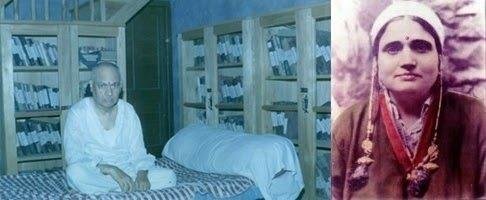
Some artists leave behind museums, awards, and official citations. Others leave behind something far more enduring—memory, influence, and quiet inspiration. Shri Suraj Narayan Tiku, my Masad, belonged firmly to the latter category. His life did not unfold amid applause and honours, yet his presence shaped Kashmiri art, theatre, and design in ways that still echo silently.
On every Gauri Tritiya, when Mata Saraswati is invoked as the embodiment of knowledge and creativity, my thoughts instinctively return to him. It feels profoundly symbolic that his birth anniversary falls on this sacred day. For those who knew him closely, there was never any doubt - he was truly blessed by Mata Saraswati.
This is not merely an artist’s biography. It is a personal remembrance, written by someone who watched him paint, design, rehearse, struggle, teach, and quietly persevere.
Shri Suraj Narayan Tiku was born in 1929, in the locality of Habbakadal, Srinagar - a part of the city pulsating with tradition, culture, and community life. His early childhood, however, was shadowed by tragedy. He lost his father at a very young age, an event that abruptly altered the course of the family’s life.
His mother emerged as the central pillar of strength. With limited resources but unwavering dignity, she raised Suraj Narayan and his sister, ensuring that education and moral grounding were never sacrificed to hardship. Looking back, it is impossible to separate the gentleness and discipline of his personality from the values instilled by his mother.
This early confrontation with loss perhaps sharpened his sensitivity - an emotional depth that later found expression in his landscapes, portraits, and stage visuals.
Art came to him not as a conscious choice, but as an instinct. From a young age, Suraj Narayan Tiku was drawn to drawing and painting. Paper, pencil, and colour became his refuge and language.
He observed keenly - the shifting light on Dal Lake, the textured walls of old Srinagar homes, the play of shadow in narrow lanes. These impressions quietly accumulated and later reappeared on both canvas and stage.
After completing his matriculation in 1945, he enrolled at the Amar Singh Technical Institute, Srinagar, where he earned a Diploma in Fine Arts. At the time, this institute was the nerve centre of visual arts education in Kashmir.
Here, he trained under stalwarts such as Pt. Shridhar Joo, Pt. Shivji Raina, and most importantly, Pt. Kashi Nath Bhan—a towering figure in Kashmiri theatre and art. Bhan Saab became not merely a teacher, but a lifelong mentor, shaping Suraj Narayan Tiku’s understanding of both painting and stagecraft.
Before fame or professional recognition, Suraj Narayan Tiku served as a drawing teacher, first in Hoshiarpur (Punjab) and later in Pattan, Kashmir.
He did not impose rigid formulas on his students. Instead, he encouraged observation, patience, and emotional engagement. Many students later recalled that he never rushed a line or a colour—and never allowed them to do so either. Teaching, for him, was not employment; it was sadhana.
His artistic journey naturally expanded into theatre through Kala Kendra, Srinagar, Kashmir’s pioneering theatre institution. This marked the beginning of a lifelong relationship with the stage.
At Kala Kendra, Suraj Narayan Tiku wore multiple hats:
He acted in several notable productions, including Raksha Bandhan, Satyavan Savitri, Krishn Janam, Prahlad Bhagat, and Aurat. Even as an actor, his painter’s eye was evident - he understood space, depth, balance, and visual rhythm instinctively.
A defining moment came in 1966, when he was selected by the Song and Drama Division, Government of India, for advanced professional training in set design in Delhi.
This exposure transformed his intuitive artistry into disciplined stage engineering. He learned lighting dynamics, spatial composition, material usage, and the psychology of stage movement.
I vividly recall the impact of this mastery in the celebrated play “Nefa Ki Ek Shaam”, staged at Gulab Bhawan, Jammu, in the post-1962 Indo–China War period. Even as a child, I was struck by how the set itself seemed to narrate the story. The play went on to have numerous performances across India, becoming a landmark of its time.
For me, his true studio was his home. As a child, I frequently visited my Masi’s house, especially on the occasion of his birthday. Those visits were transformative.
I watched him work in silence - sometimes on finished pieces, often on incomplete ones. I observed his meticulous colour schemes, his layering of watercolours, and his sketching process that slowly shaped Kashmir’s landscapes on paper.
His works ranged from:
Those hours left a permanent imprint on my raw mind and later inspired my own engagement with drawing and watercolour painting as a lifelong hobby.
The final major chapter of his professional life unfolded at the School of Designs, Jammu & Kashmir Government. Here, his diverse experience found institutional expression. He mentored young artists, designers, and theatre aspirants, bridging traditional Kashmiri aesthetics with modern design sensibilities. He retired from service in 1984, leaving behind an enriched institution and a generation of influenced minds.
Despite being a towering presence in Kashmiri art and theatre, formal recognition eluded him. Many of his contemporaries received honours, titles, and public acclaim.
This was not due to lack of merit, but perhaps due to his humility, aversion to self-promotion, and unwillingness to compromise artistic integrity for visibility. History, unfortunately, often favours the loud over the profound.
The upheaval of 1990 forced him, like thousands of Kashmiri Pandits, to migrate to Jammu. Exile weighed heavily on him. Yet, even away from his homeland, he continued to paint Kashmir - not from sight, but from memory.
He passed away on 26 January 1997, leaving behind canvases, sketches, sets, students, and an unfulfilled promise of recognition.
Shri Suraj Narayan Tiku did not chase legacy - he lived it. His life reminds us that true art does not always seek applause. Sometimes, it simply seeks truth.
For me, he remains my Masad - the silent teacher whose brush strokes shaped my understanding of beauty. On every Gauri Tritiya, I bow not just to an artist, but to a life lived in devotion to art.
Namaskar.
by Author: Yekjah • 5
by Author: Suniel Kumar Dhar • 5
by Author: Mithlesh Dhar • 5
Nestled among the snow-capped peaks and serene valleys of Kashmir bloomed one of the greatest mystic voices of the Indian subcontinent — Lalleshwari, lovingly called Lal Ded by the Kashmiri people. Born in the 14th century, her life and verses continue to illuminate the hearts of spiritual seekers across centuries.
Early Life and Awakening
Lalleshwari was born around 1320 CE in Pandrethan (near present-day Srinagar). Details of her early life are interwoven with legend and oral tradition. Her given name was believed to be Lalleshwari (“grace of God”), though she is most affectionately remembered as Lal Ded, meaning “Grandmother Lal.”
Married at a young age, Lalleshwari faced harsh treatment in her in-laws’ house. The spiritual seeds within her, however, were already sprouting. Disillusioned by worldly life, she yearned for a deeper truth. This inner quest led her to Siddha Shrikanth, under whose guidance she delved into Shaivism and intense yogic practices.
The Path of Mysticism
Lal Ded walked away from domestic life to become a wandering ascetic, clad only in a simple woolen garment — or sometimes, legend says, entirely unclad, symbolizing her renunciation of all social norms. She roamed the lush valleys and hills of Kashmir, lost in divine absorption.
Her spiritual philosophy drew deeply from Kashmir Shaivism, particularly the Trika school, which celebrates the unity of the individual soul (atman) with the universal consciousness (Shiva). Through bhakti (devotion) and self-realization, she sought to transcend dualities.
The Vakhs: Pearls of Wisdom
Lalleshwari expressed her profound insights through short, intuitive poems called vakhs (literally “utterances” in Kashmiri). These four-line verses, composed in the native tongue, are simple yet layered with spiritual depth. They explore themes of self-inquiry, ego dissolution, divine love, and the ephemeral nature of worldly existence.
Examples of her vakhs reflect a fearless voice that challenged orthodoxy:
> Shiva resides not in temples of stone;
My body is His temple, my heart His shrine.
Or in another:
> I searched for my Self until I grew weary,
but no one, I know now, reaches the hidden knowledge by mere effort.
Her poetry often took gentle jabs at ritualistic religion, urging people to seek the divine within.
A Universal Mystic
Though rooted in Kashmir’s Shaiva tradition, Lal Ded’s teachings are universal. Her verses cross the boundaries of religion and philosophy. Both Hindus and Muslims of Kashmir revere her equally. In fact, the great Sufi saint Sheikh Noor-ud-din Noorani (Nund Rishi) regarded her as his spiritual mentor, a testament to her unifying influence.
Legacy
More than 600 years later, Lalleshwari’s vakhs still form the spiritual bedrock of Kashmir’s cultural identity. They are sung, recited, and woven into everyday wisdom. Many of her sayings live on as Kashmiri proverbs.
Today, Lal Ded stands as an embodiment of feminine spiritual power, resilience, and unflinching truth. Her life teaches us to look inward, beyond external rituals, to find the divine spark that resides in every heart.
Closing Thoughts
Lalleshwari’s life was a radiant pilgrimage from pain to profound enlightenment. In a time of rigid societal norms, she dared to live her truth, becoming a lamp of divine consciousness not just for Kashmir, but for all humanity.
Her vakhs are not relics of the past — they continue to whisper timeless truths, urging us to awaken to our own inner divinity. Truly, the mystic grandmother of Kashmir still lives on, in verse and in spirit.
by Author: Yekjah • 5
by Author: Suniel Kumar Dhar • 5
by Author: Mithlesh Dhar • 5
My name is Mithlesh Dhar, and I am a father living 2,200 kilometers away from my heart.
By day, I work in the glass towers of Hyderabad. By evening, I look at my two-year-old daughter and wonder: “How will she know the scent of the Chinar? How will she feel the weight of our stories if she only hears them in a city so far from the mountains?”
I built Yekjah (meaning Togetherness) because I realized that as we move for our careers, our culture shouldn't be left behind in a packed suitcase.
In a world of AI and "big" social media, our specific stories are getting lost. We are more connected than ever, yet a Kashmiri in Hyderabad or anywhere around the world feels alone. We worry about our children losing their mother tongue. We miss the grit of the road, the taste of home, and the simple joy of being among our own.
This website is not just a social network. It is a Digital Homeland. I built this as a legacy for my daughter, and a sanctuary for you.
To Preserve: A place to archive our family trees, our recipes, and our language so they never fade.
To Connect: A bridge for those of us driving our cars across the plains of India to find one another.
To Belong: A platform where being "local" isn't about where you work, but where your heart resides.
Yekjah is my love letter to Jammu & Kashmir, and my gift to the next generation.
Whether you are here to share a story, find a piece of home in a distant city, or simply plan your next drive back to the mountains—welcome home.
by Author: Yekjah • 5
by Author: Suniel Kumar Dhar • 5
by Author: Mithlesh Dhar • 5
Comments (0)